Soft, high-expansion foam that swells up to 100 times its sprayed volume and finds every void in a wall, which is exactly what houses framed across three different decades need. Full cavities, quieter rooms, and the most coverage any insulation dollar buys.
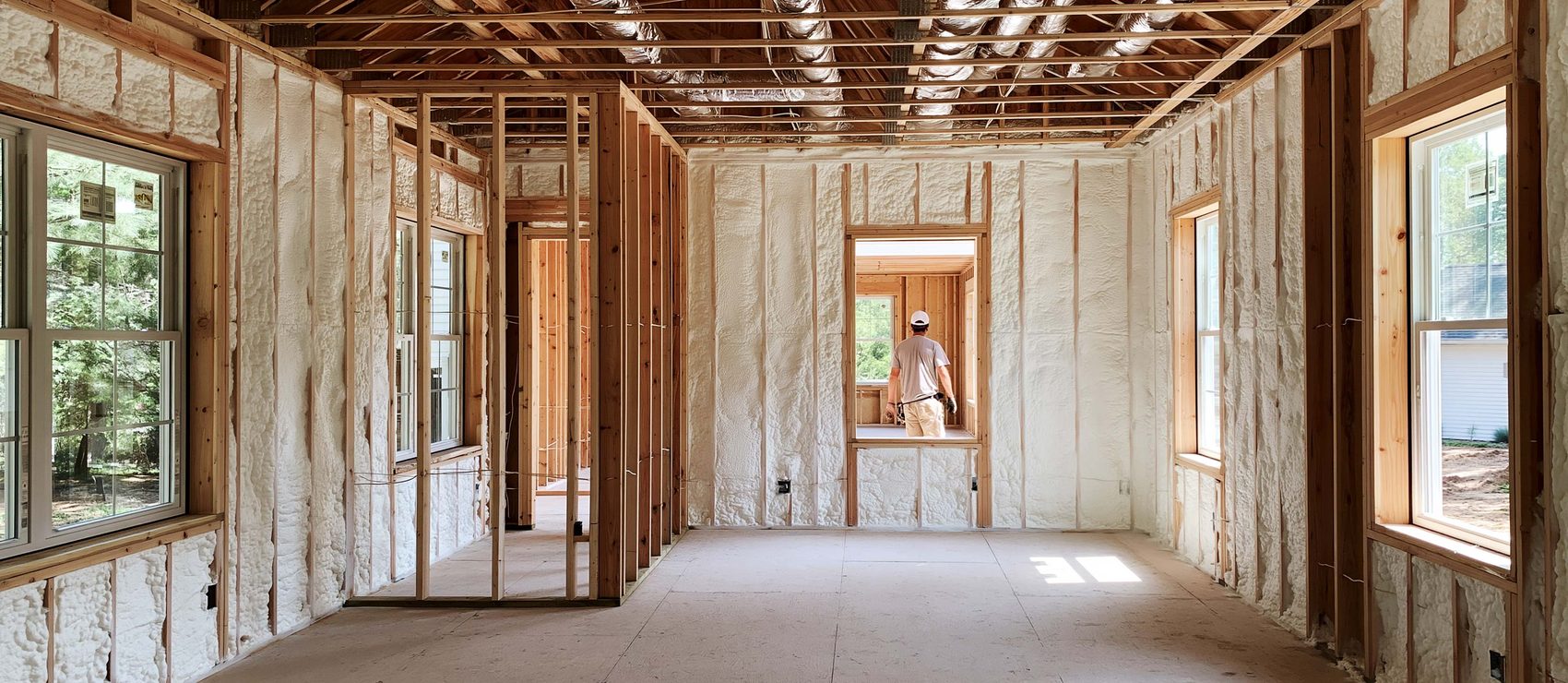
Fayetteville AR Spray Foam loves a complicated wall, and Northwest Arkansas builds few simple ones. A farmhouse framed in rough-cut oak, a campus bungalow carrying two additions from two different owners, a seventies ranch with a garage that became a den: around here, one house holding three eras of framing is not the exception, it is Tuesday. Open cell spray foam insulation is the material we bring to those walls, because it does not need the framing to be square, consistent, or even from the same century.
Expansion is the feature. Open-cell leaves the gun as a liquid and swells to as much as 100 times its volume, flowing around wiring, plumbing, blocking, and every out-of-plumb stud on its way to filling the cavity completely. It cures soft, about half a pound per cubic foot, and by roughly three and a half inches of depth it stops air movement through the assembly, which is where most of an Arkansas energy bill actually leaks out. Batts get cut to the wall somebody meant to build. Open-cell fills the wall that got built.
A wall that can dry beats a wall that cannot. Our climate pushes moisture inward through a wall in July and outward in January, and assemblies here are healthiest when they can release vapor in whichever direction the season demands. Open-cell stays vapor-open, so a wall keeps its ability to dry while gaining its air seal, which is precisely the behavior a mixed-humid zone rewards. On surfaces facing real moisture pressure the spec changes to closed-cell, and knowing where that line falls is most of what you are hiring.
What the fill buys you:
Deep 2x6 walls, rafter bays, bonus rooms, additions old and new: if the cavity is dry and irregular, this is its foam.
Fayetteville is a university town, and its houses work hard: rentals with four leases under one roof, home offices sharing a wall with the laundry, a nursery over a den, game-day traffic rolling past the porch every fall Saturday. Open-cell in interior walls and floor assemblies takes the edge off all of it, absorbing the airborne sound that studs and drywall are happy to hand from room to room. It will not turn a duplex into a recording studio, and we will never claim it does, but the difference between a shared wall with foam and one without is the difference between hearing a conversation and hearing that one happened.
Installed open-cell in this market typically runs $0.60 to $1.20 per board foot, one square foot at one inch thick, which is what makes it the coverage champion of the foam family. Filling the walls of an average addition usually lands in the low thousands, and whole-home new construction packages scale with square footage and cavity depth. Because it fills deep framing affordably, the per-room math often surprises people who priced foam years ago, and the free estimate turns the averages into a real number for your walls.
In the right locations it is not just acceptable, it is the preferred behavior. Arkansas walls see moisture pushed inward all summer and outward all winter, and open-cell stays vapor-open so the assembly can dry in whichever direction the season requires, all while blocking the air movement that carries most of the moisture in the first place. Where it does not belong is against surfaces under direct moisture pressure, crawl space block, steel panels, rim joists, and that is closed-cell territory. The material is sound; the spec is everything.
The window-and-door foam from the hardware store earned that fear, because some of those products expand with real force. Half-pound open-cell is a different animal: it expands fast but soft and cures at low density, flowing around romex, supply lines, and junction boxes without loading them. Installers still keep clearances around heat-producing fixtures and follow the electrical rules for access, which is part of what a professional application includes, but crushed pipes and pinched wires are not a property of this material.
Noticeably, honestly, and with limits. Half-pound foam absorbs airborne sound very well, so voices, televisions, plumbing rush, and street noise all lose their edge moving through a foamed wall or floor. What it cannot erase is structural impact noise, footsteps on the floor above being the classic case, which travels through framing rather than air. For rentals, home offices, and shared walls the improvement is real and immediate; for a dedicated media room we would talk about layering foam with other assemblies.
It can take on water in a soaking event, and it can also release it, which is the part the sponge myth leaves out. After incidental wetting, open-cell dries and returns to service, unlike fiberglass that mats down and stays down. What it is not is a material for chronically damp locations, which is why you will never see us spec it below grade, on crawl space walls, or anywhere the moisture is a resident rather than a visitor. Right foam, right surface, every time.
No, and any installer who offers to should make you nervous. Foam needs to bond to the ceiling plane to air-seal it, and old loose fill in between means the foam bonds to debris instead of the house, sealing nothing and hiding whatever the old insulation was covering up. The existing material comes out first through our insulation removal service, the plane gets cleaned and inspected, and then the foam goes on to a surface it can actually grip.
The air-sealing threshold arrives at roughly three and a half inches, and past that point additional depth is buying R-value rather than changing the assembly's behavior. In practice we fill the cavity that exists, a 2x4 wall gets about three and a half inches, a 2x6 wall gets five and a half, and rafter bays get specced to the R-value target the project is chasing. Trimmed flush and drywalled, a full cavity is the whole point of choosing a foam that expands to find it.
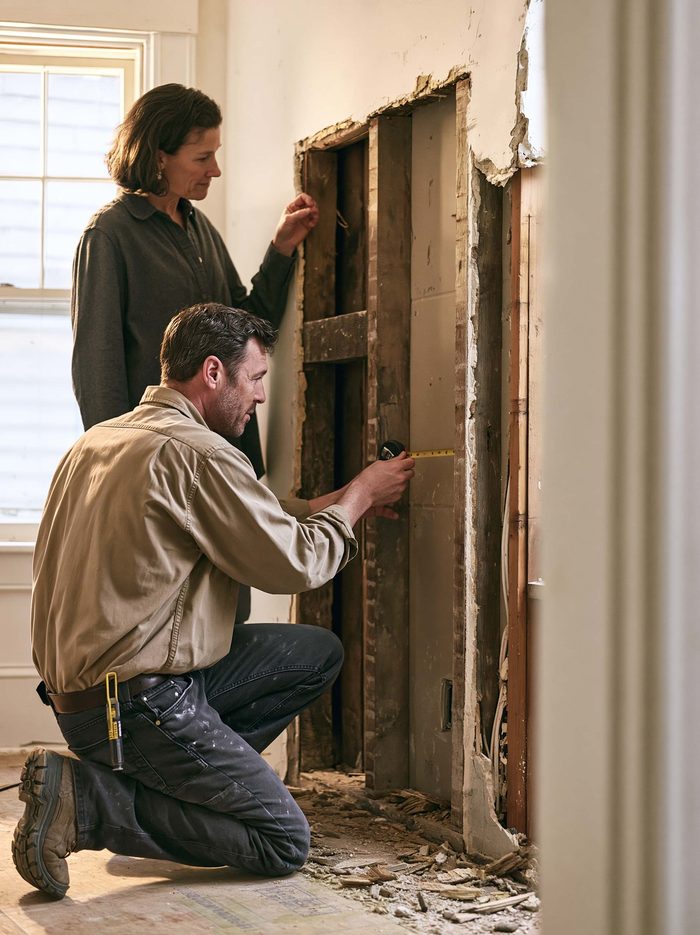
Tell us the age of the house and how many times it has grown. We will sort out the framing eras, measure the cavities, and quote the fill.
