A vented crawl space invites every humid Ozark afternoon in under your floors. Sealing it is the single biggest comfort upgrade most Northwest Arkansas homes can make.
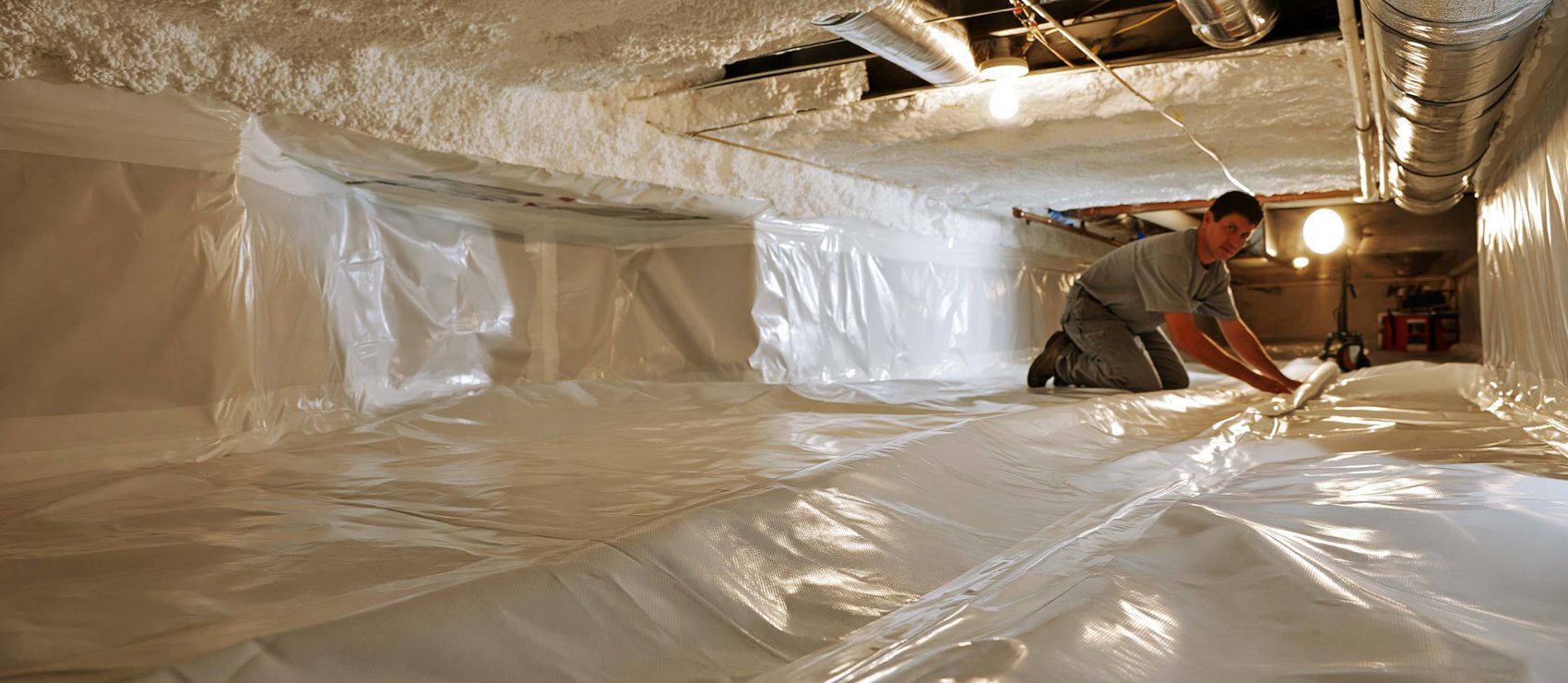
Fayetteville AR Spray Foam treats the crawl space as the first appointment of an Arkansas summer, because by July the space under a vented floor is running a climate of its own. Warm, damp outside air drifts in through the foundation vents, meets framing and ductwork that stay cool in the shade, and condenses there day after day. Crawl space encapsulation exists to shut that cycle down, and in a mixed-humid climate like ours it is the most consequential single project we install.
The vents were the old logic: let the space breathe and moisture will take care of itself. In a region where July dew points sit in the 70s, the opposite happens. Every cubic foot of air the vents admit carries water, and the cool surfaces down there wring it out like a cold glass on a porch table. Give that a few seasons and you get dark staining on the joists, insulation sagging with absorbed moisture, and a smell upstairs that no amount of cleaning explains.
A sealed crawl space rewrites the math:
We build the whole system, not one piece of it, and we spec it for the house standing on top: pier-and-beam cottages in the older neighborhoods near campus, hillside homes with one tall downhill wall, ranches with a full run of ductwork below the floor. The crawl space is different under every one of them, and the design should be too.
Most Northwest Arkansas homes with a crawl space run their supply ducts through it, which means every degree of heating and cooling you pay for travels through the dampest, least controlled space on the property before it reaches a room. In summer, cold metal sweats in the humid air and drips onto the liner and framing. In winter, warm air sheds heat into a space that is effectively outdoors. Encapsulation pulls that ductwork inside the envelope, so the system stops fighting the crawl space before it ever conditions the house. The rim joist gets foamed in the same visit, closing the last big leak at the top of the foundation.
Priced per square foot of crawl space, most full encapsulations in this area land between $3 and $7 installed, with the spread driven by liner thickness, how much perimeter wall gets foamed, whether a dehumidifier is included, and the condition of the space going in. A typical NWA footprint of 1,200 to 2,000 square feet puts most projects in the mid four figures. Standing water, failed old insulation that needs removal, or drainage work adds to that, which is exactly why we quote from inside the crawl space and never from the curb.
The honest list is short but real. It costs more up front than throwing a sheet of plastic on the dirt. The dehumidifier needs an outlet and an occasional filter cleaning. If the crawl space houses a gas furnace or water heater, combustion air has to be planned for before the space is sealed. And a careless install that skips air sealing or ignores drainage can trap moisture instead of stopping it, which is a design failure rather than a flaw in the method. Every one of those items is handled in the initial inspection, not discovered afterward.
The reinforced liner is rated for 15 to 20 years and routinely outlives its rating when nobody is dragging equipment across it. The closed-cell foam on the walls holds its performance for decades. The dehumidifier is the one component with a normal appliance lifespan, typically 8 to 12 years before replacement. Sealed once and left alone, the system is the closest thing to a permanent fix a humid-climate crawl space can get.
A ground-only crawl space vapor barrier stops soil moisture from evaporating upward, and that is all it does. The vents stay open, so the humid outside air that causes most of the damage in Northwest Arkansas keeps flowing in and condensing on your framing all summer. It is a partial fix at a partial price, and it cannot be upgraded by layering a new liner over a failed one later, because trapped moisture between layers makes things worse. If budget forces a phased approach, we would rather stage the full system than install half of one.
The materials are all available to buy, and the job punishes shortcuts more than almost any project on a house. The failure points are the details: seam sealing that actually holds in a space you can barely turn around in, terminating the liner correctly at piers and walls, judging whether drainage has to come first, planning combustion air, and sizing the dehumidifier to the real volume of the space. We regularly get called to rework DIY installs, and the redo usually costs more than doing it once would have.
In a sealed crawl space the insulation belongs on the perimeter walls, not stapled between the floor joists. Foaming the walls moves the thermal boundary to the foundation, which brings the crawl space and everything in it, ducts included, inside the protected envelope. Floor-above insulation belongs to the old vented strategy, and it is the sagging fiberglass version of that strategy we spend our time pulling out.
Usually not, because insurers treat encapsulation as preventive home improvement rather than repair. The exception is when a covered water event damages the crawl space and remediation work is part of the claim, in which case some of the restoration budget can go toward sealing the space properly instead of rebuilding it the old way. Your policy language decides it, so it is worth a call to your agent before assuming either answer.
Tell us the age of the house and the last time anyone looked underneath it. We will handle the crawling, take real moisture readings, and hand back one number for the whole system.
