Dense, rigid foam that insulates around R-7 per inch and stops water vapor cold at depth. It is what we spec for crawl space walls, rim joists, metal buildings, and every other surface humid air likes to sweat on.
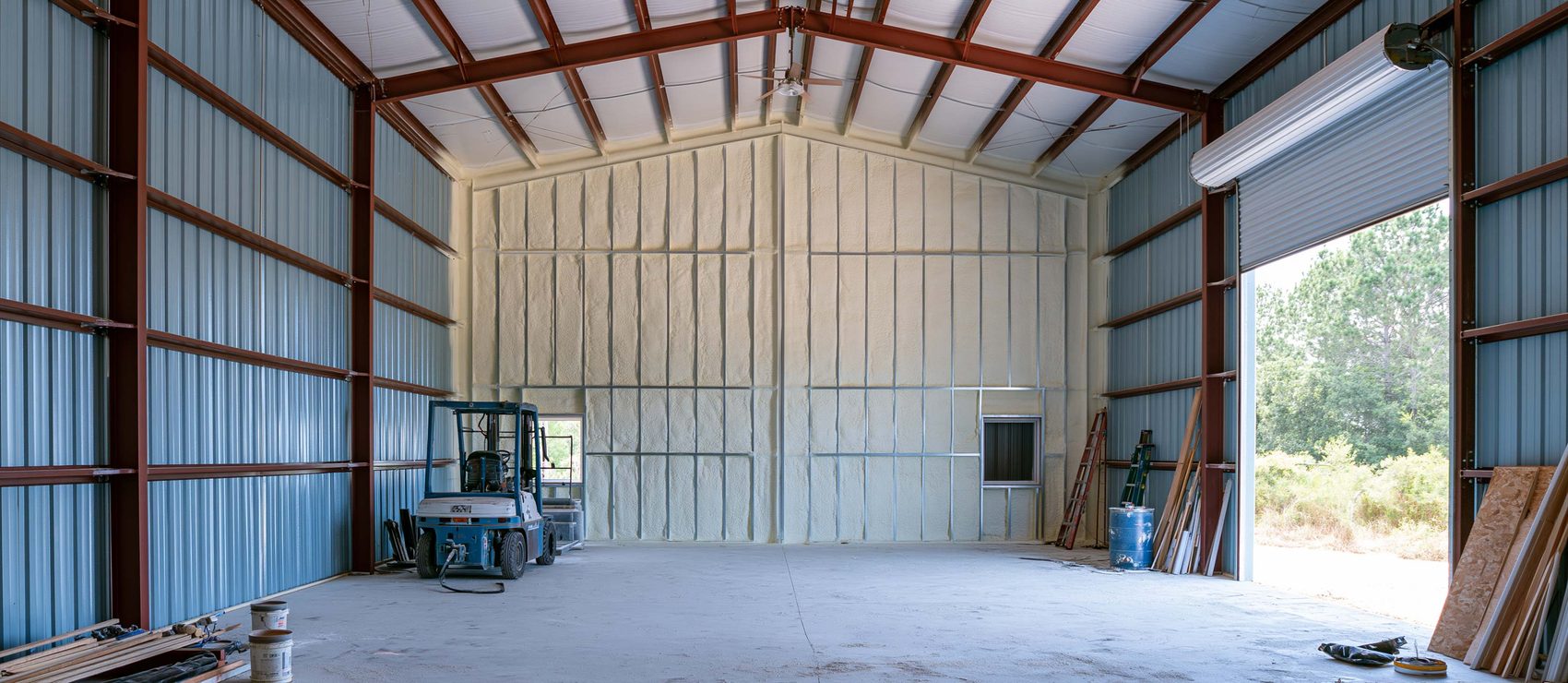
Fayetteville AR Spray Foam reaches for closed-cell whenever the job involves a surface that sweats: block foundation walls, steel building skins, the band of framing that rides above a damp crawl space. Closed cell spray foam insulation is the dense, rigid half of the foam family, roughly two pounds per cubic foot, and in a humid climate its R-value is only part of the resume. The rest is what it does to water vapor.
Condensation is a location problem. The same physics that fogs a bathroom mirror plays out inside Arkansas buildings all summer: humid air touches a surface cooler than its dew point and leaves water behind. You cannot change the July air, but you can change the surface. Closed-cell bonded to block or steel insulates that surface so it never runs cold enough to condense on, and once the foam passes about two inches of depth it also stops vapor from migrating through. The sweating does not get managed. It ends.
Where we spec it in Northwest Arkansas:
There are two quieter benefits worth knowing. Cured closed-cell stiffens whatever it bonds to, which metal building owners notice the first windy day. And it is the insulation FEMA lists as flood-resistant, a detail that matters in a state where spring storms occasionally put water where it has no business being. We apply it in controlled lifts of about two inches at a time so each pass cures properly, which is slower than dumping thickness in one go and is also the difference between foam that performs for decades and foam that gets removed.
Closed-cell costs more per unit of R-value, and on surfaces without moisture pressure that premium buys you nothing. Deep interior wall cavities, big open rafter bays, and sound walls are territory where open-cell spray foam delivers more comfort per dollar and keeps an assembly able to dry. Most whole-home quotes we write in NWA carry both materials, each assigned to the surfaces it suits, and we will show you that split line by line rather than selling the expensive foam everywhere. Dense foam where the moisture pushes, light foam where it does not, and a bid you can actually compare.
Installed closed-cell in this market generally runs $1.20 to $2.50 per board foot, meaning one square foot at one inch thick, so a rim joist job on an average home lands in the low thousands and full crawl space walls or a shop interior scales up from there with square footage and depth. It costs more per inch than open-cell because the material is denser and does two extra jobs, vapor control and rigidity, that open-cell does not attempt. Exact numbers come from measuring the actual surfaces, which is what the free estimate is for.
On a sweating surface, yes, and on a dry one, usually no. Where humid air meets cool block, steel, or band framing, closed-cell is buying you vapor control and condensation prevention that open-cell simply does not offer at any thickness, so the premium is purchasing a different job, not a nicer version of the same one. In deep, dry interior cavities the extra dollars buy nothing you can feel, which is why our quotes assign each foam to its own territory instead of pushing one product wall to wall.
No. Once closed-cell passes roughly two inches of depth it performs as its own vapor retarder, which is precisely why it gets specced on crawl space walls and metal panels where a separate barrier would be one more thing to seal, tape, and eventually fail. Code treatment of vapor retarders varies by assembly and jurisdiction, and we handle that determination as part of the spec so the wall is built to the rule that actually applies to it.
Foam bonds to what it touches, so the answer determines the whole job. Surfaces need to be dry, clean, and sound before the gun comes out, and if a wall is actively wet we find the water source first, because foam over a live leak seals the problem in rather than out. Part of every estimate is telling you honestly whether the surface is ready, needs prep, or needs a repair that comes before insulation entirely.
Most NWA crawl and foundation walls get two to three inches, which carries the assembly past the vapor-control threshold and into the R-value range the codes ask of below-grade and crawl space walls. Going thicker buys more R where a project calls for it, but the two-inch mark is the line where the moisture behavior changes, and that is the line that matters most in this climate. We spec the depth per wall and put it in writing so you can see what each inch is doing.
It genuinely stiffens what it bonds to, and it is honest to be precise about what that means. Cured closed-cell increases the racking resistance of framed walls and takes the oil-can flex and wind rattle out of metal panels, which is why shop owners often say the building feels more solid the week after we spray. What it is not is a structural repair, so a cracked foundation or failing framing needs its own fix first, and we will say so when we see it.
By the numbers, rarely. Kit foam typically costs more per board foot than professionally installed foam once you price real coverage, and the failure modes are unforgiving: off-ratio chemical mix, foam applied too thick in one pass, or spraying onto surfaces outside the temperature range the chemistry needs. A weekend kit job that goes wrong becomes a removal job plus a respray. For a small patch it can make sense, but for a whole shop the professional number is usually lower than people expect and the result is warrantied.

Tell us which wall, shop, or crawl space has been sweating on you. We will spec the inches it actually needs, not one more, and price it straight.
